Case study — Learning Lab
Learning Lab — community-owned infrastructure for educators the internet keeps evicting
A self-hostable learning and community platform, co-designed from the first conversation with educators whose work mainstream platforms won't host — and built so they can run it themselves.
This project started as the smallest possible ask: two educators wanted help using AI tools more effectively in their business. They ran learning communities for practitioners who work with bodies — a field that mainstream platforms tolerate at best. Their businesses lived across Squarespace, Circle, Google, and PayPal, and every one of those platforms had terms of service their subject matter technically violated.
They had already lived the consequences. Payment processors freezing access to money. Communities taken offline with no appeal and no recourse. An entire practice — clients, course content, years of discussion — existing at the pleasure of platforms designed to evict them.
I proposed an audit: a map of their full SaaS stack — where every piece of their business lived, what data flowed where, and what would break if any one platform decided they were no longer welcome.
They came asking how to use AI better. What the audit found was that their income, their communities, and their clients' trust all lived on rented land.
The Audit
The smallest ask, taken seriously
The audit reframed the problem. These educators care deeply about consent and trust — it's the foundation of their profession. But their infrastructure contradicted their values: client names, intake details, and payment records were spread across five platforms, each one a separate vulnerability, none of them under the educators' control. Being good stewards of their clients' information required understanding and owning the systems holding it, and they had neither.
We ran a mapping exercise together: every function their business needs, the options for each, and the tier-one changes that would meaningfully improve security and data sovereignty without requiring them to become technical. The two educators found the work valuable enough that they offered to fund part of it, so the findings could be shared with their wider professional cohort — a community of certified practitioners who help each other and share the same exposure.
One gap had no good answer. For "learning community" platforms — course content plus discussion plus events, the thing Circle and Mighty Networks sell — the open-source alternatives are built for universities, leaving independent educators unserved. There was nothing they could realistically run themselves. So we started defining what an open-source alternative would absolutely need to have, requirement by requirement, with the community in the room.
Co-designing the Platform
What the community said it absolutely needed
Learning Lab is the result: a self-hostable course and community platform that runs as a single Docker container, with the community's data in a database they own. Courses, lessons, quizzes, discussion, member profiles, events, and payments — the feature set they were renting from four platforms, on infrastructure they keep.
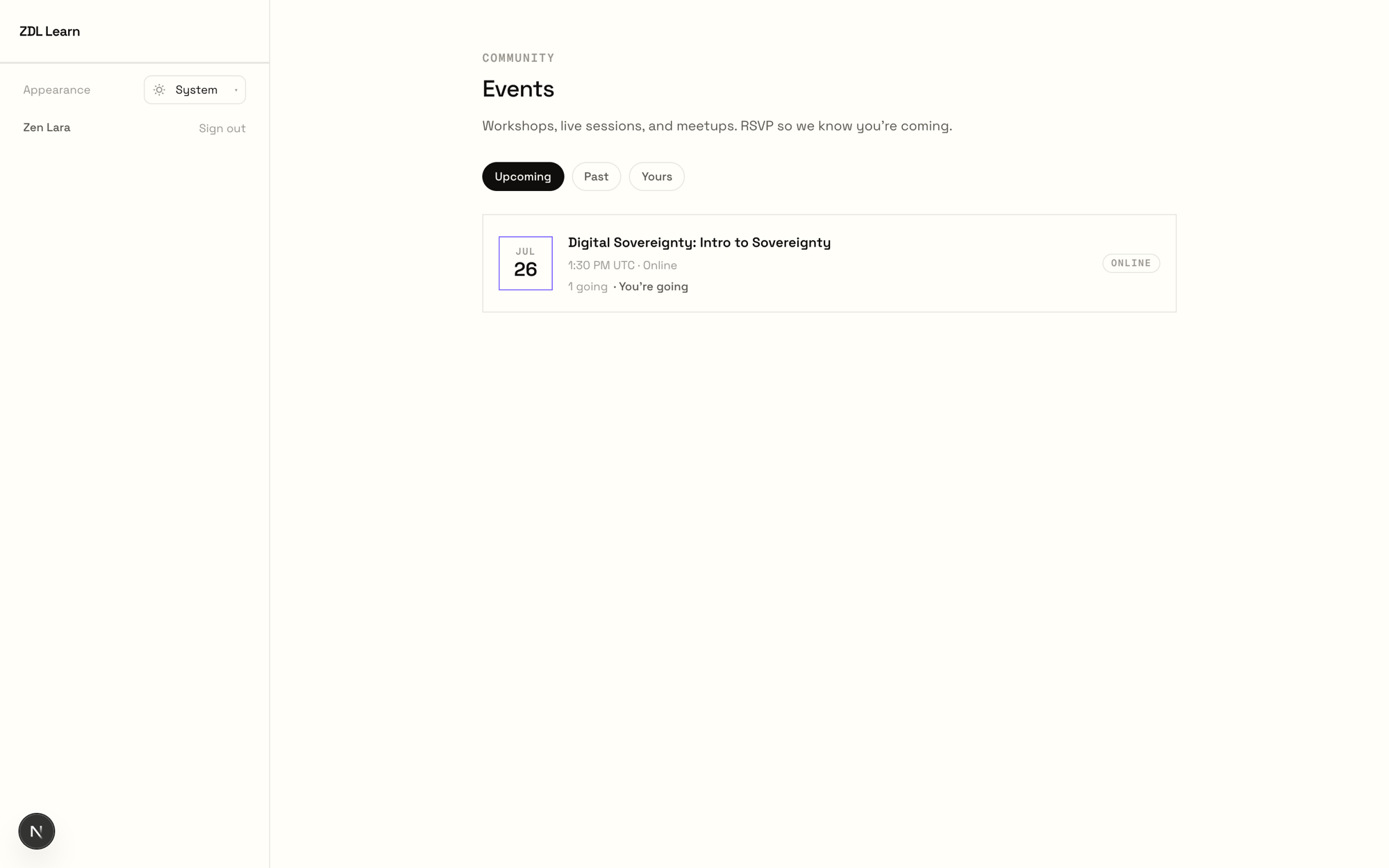
I benchmarked the platforms the community was already living on — as a participant, walking their actual communities feature by feature — and translated what genuinely mattered into the build. What mattered was the handful of interactions that make a community feel inhabited: discussion attached to the lesson that prompted it, events with one-click RSVP, a feed built for conversation.
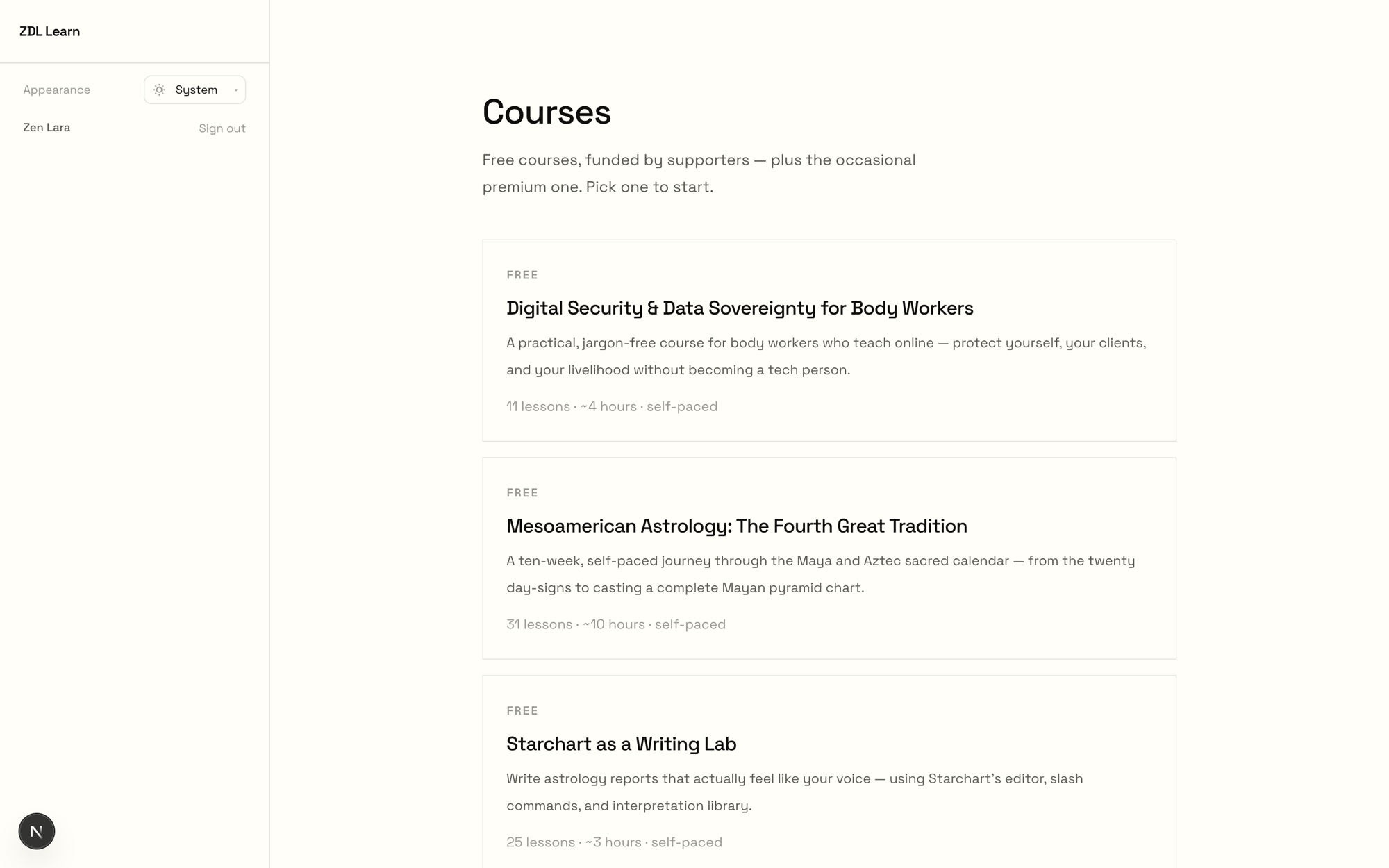
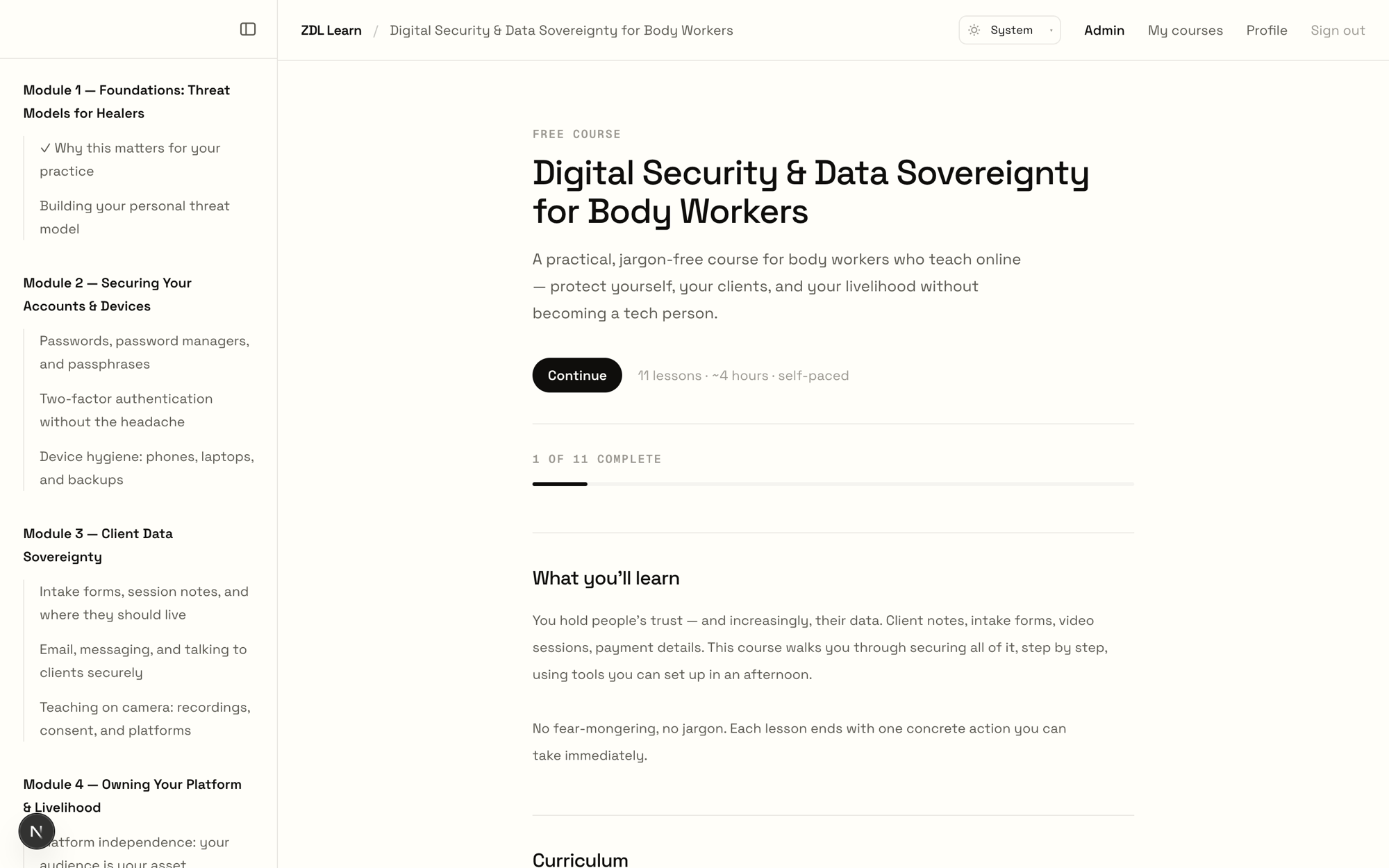
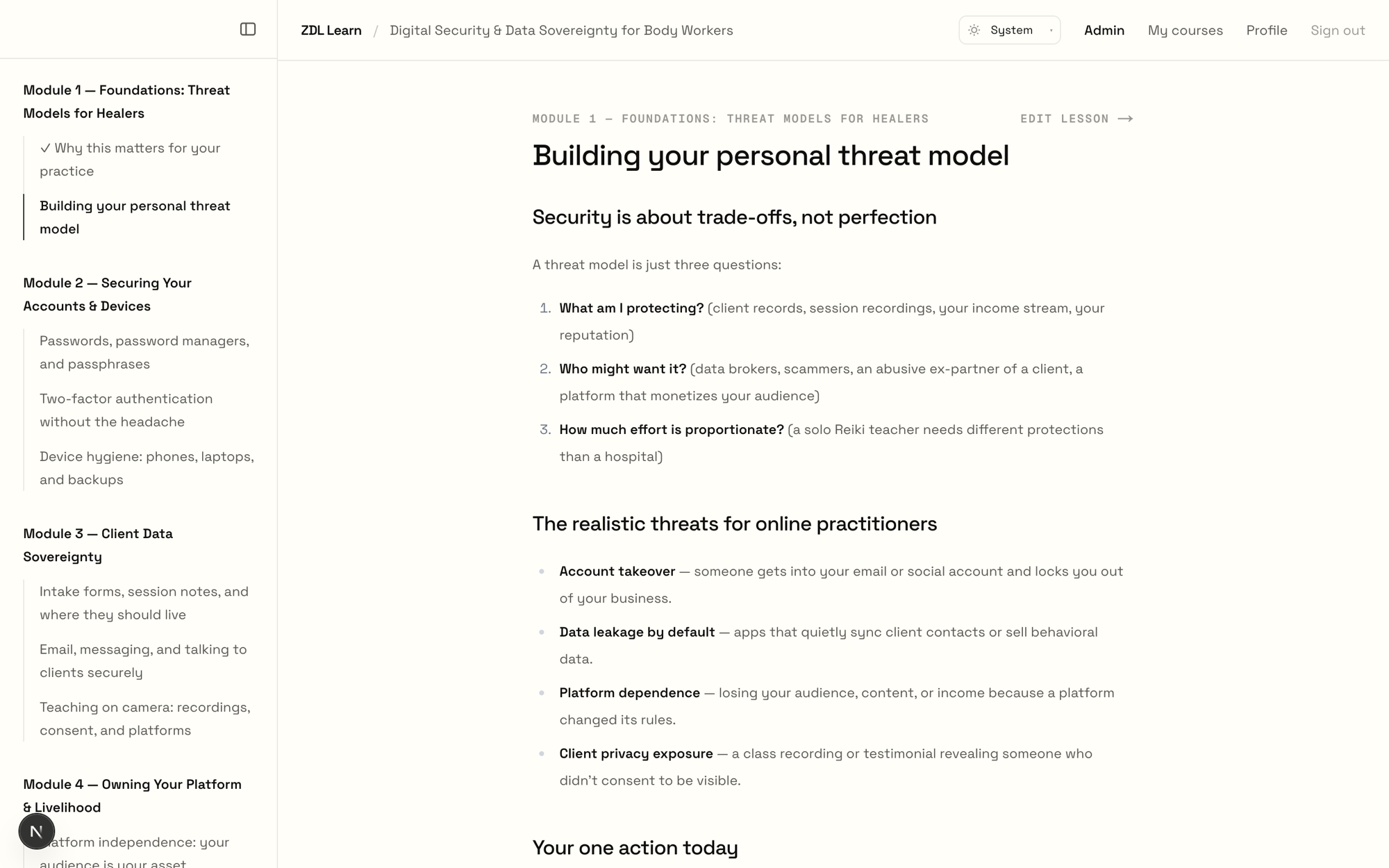
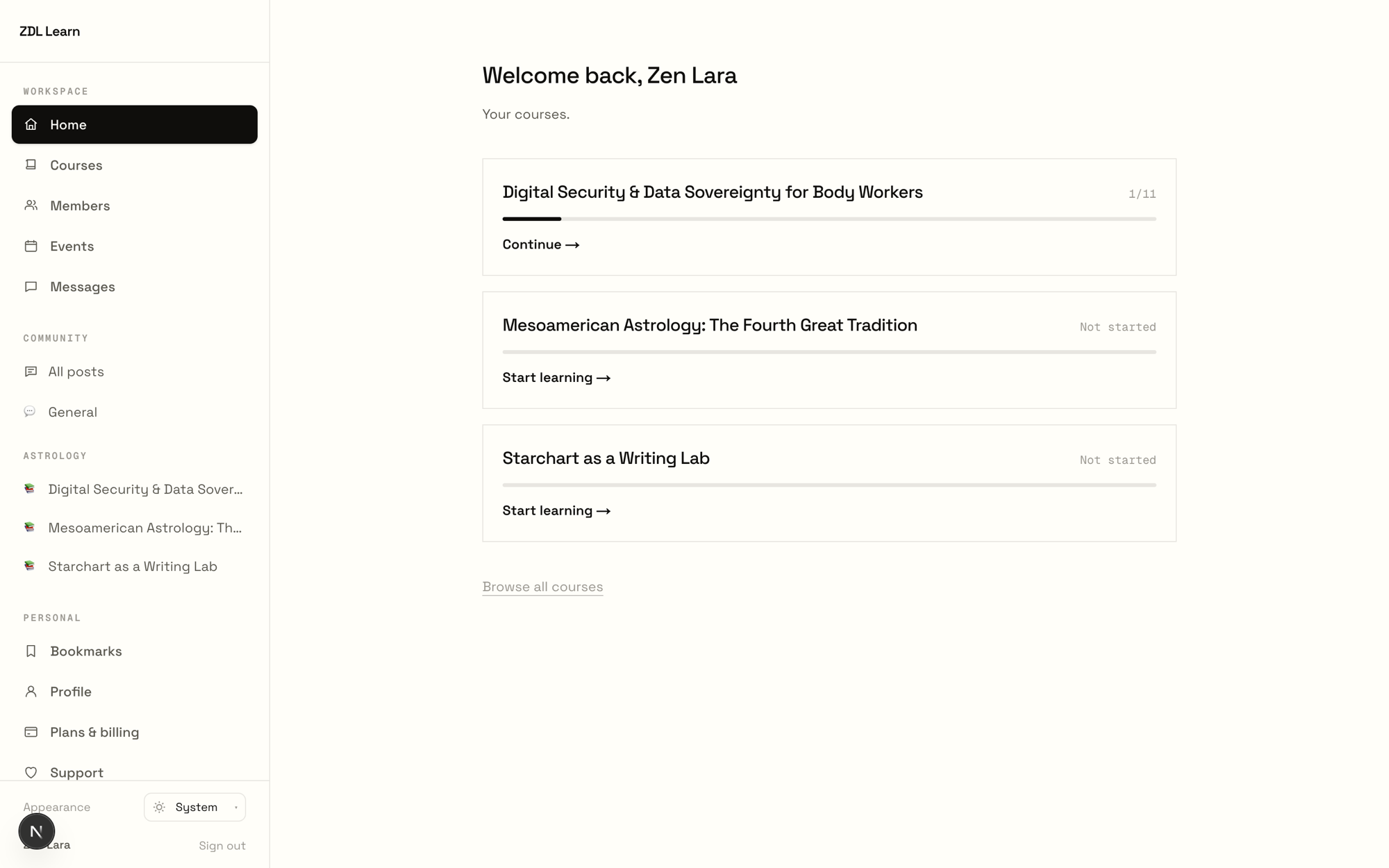
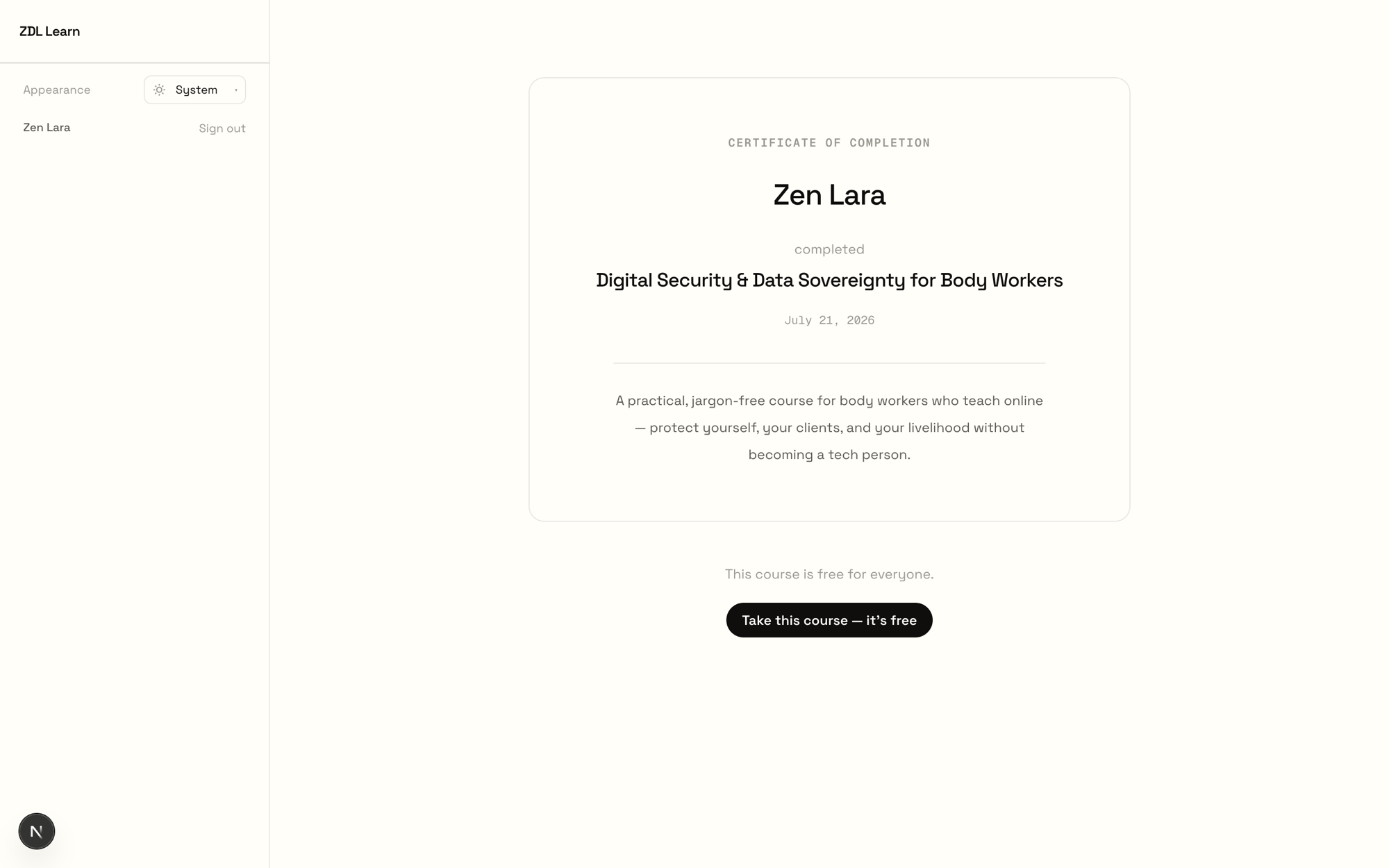
Some decisions only make sense because the community was in the room. Sign-in is passwordless magic links, so the practitioners have one less credential system to manage. Support asks appear only at natural pauses — module ends, completion pages — because "never pressure" was a design requirement the educators set themselves. And discussion lives inside each lesson, so questions accumulate exactly where the next learner will have them.
Symbiotic Infrastructure
A platform that can explain itself
The honest objection to self-hosting is that these are people who chose Squarespace because they don't know what DNS is. Handing them a Docker container and wishing them luck would be abandonment with extra steps.
Learning Lab's answer is what I've been calling symbiotic infrastructure. The container bundles an embedded open-source AI agent (an OpenClaw agent running an open-weights code model) that carries the operational knowledge of the platform: how it's set up, what its pieces are, how to fix what breaks. When something goes wrong, the educator asks their own infrastructure, in plain language, and it helps. The agent is the maintenance manual: on call, included in the box.
The other half of the answer is curriculum. The flagship course teaches the community digital security and infrastructure basics — the same material the audit surfaced, now taught on the platform it justified. The community is unusually motivated to learn it: they've experienced deplatforming, and they frame this knowledge the way I'd hoped they would — as digital self-defense, and as duty of care to their clients.
What guided the work
Co-designed from the first conversation
The community defined the requirements before a line was written. The platform answers their question.
Data sovereignty as duty of care
Owning client data is how educators who trade in trust keep faith with the people they serve.
Never pressure
Free by default, supported voluntarily, premium only when the educator chooses. Monetization appears only at natural pauses.
Infrastructure that explains itself
An embedded agent carries the operational knowledge, so a non-technical owner is never more than a question away from a fix.
The community's brand
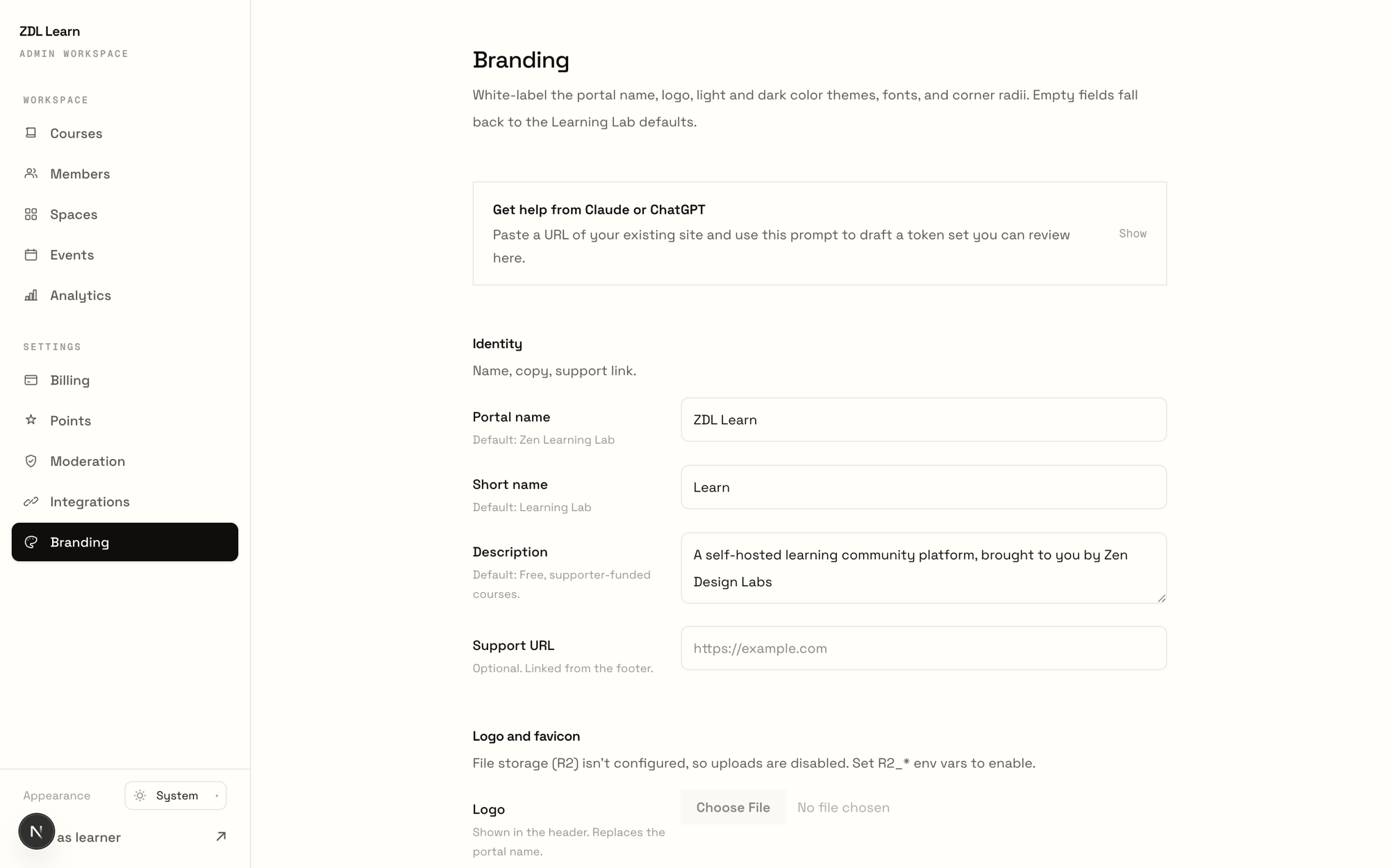
Full white-labeling as a first-class surface. Every deployment should look and feel like the community that runs it.
Exit is a feature
Standard formats, portable data, scripted backups. A platform built against deplatforming has to stay easy to leave.
What feels precious to design now
Software has never felt cheaper to build, and that changes what deserves design attention. The screens in Learning Lab were the fast part. The slow, careful, valuable work was everything around them: the audit that reframed the ask, the requirements defined with the community, the decision that the platform should teach its own maintenance.
I'm proud of this project because it was co-designed from the very beginning, and because it puts design effort where I think it now belongs — on trust, community, and a sense of purpose, the things that stay scarce while interfaces come nearly free.
Pilot Learning Lab with your community
Learning Lab is open to a small number of pilot communities — educators and organizers who want to run their courses, discussions, and events on infrastructure they own.